What is sakotis? The Lithuanian tree cake explained
What is sakotis? The Lithuanian tree cake explained
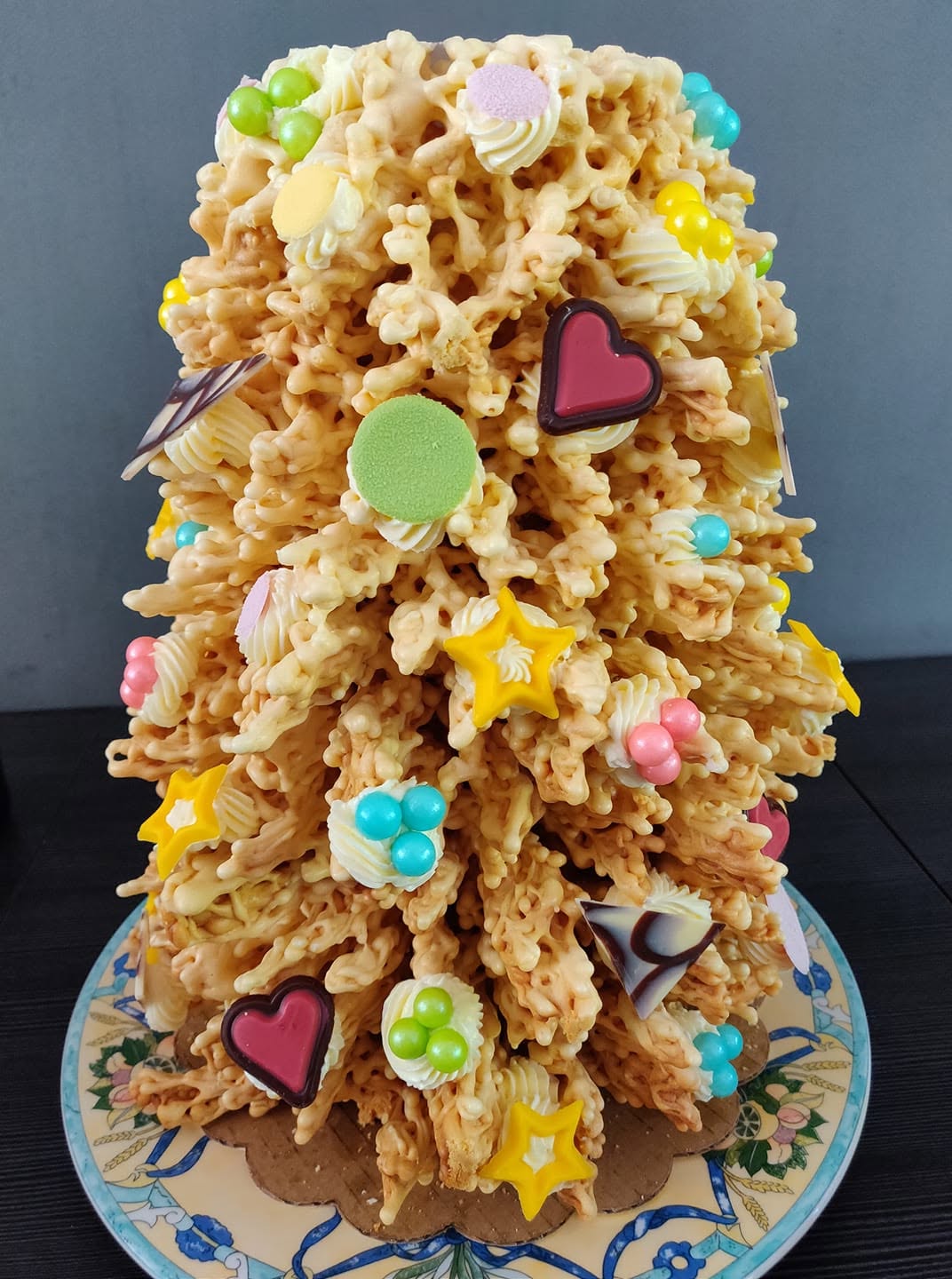
Walk into any Lithuanian celebration – a wedding, a christening, Christmas Eve – and somewhere on the table you will find a golden, spiky tower that looks more like a small tree than a cake. That is sakotis (Lithuanian: šakotis, “the branched one”), the tree cake that has crowned Lithuanian feasts for centuries.
A cake with 15th-century roots
Sakotis belongs to the old European family of spit cakes, the same family as the German baumkuchen. Bakers pour thin layers of batter over a spit that rotates slowly over an open fire. Each pass adds a ring, and the dripping batter hardens into the little branches that give the cake its name. Cut a slice and you see growth rings, just like a real tree. The technique reached the Grand Duchy of Lithuania and Poland centuries ago (where its cousin is known as sękacz), and it has been the festive centrepiece there ever since.
Why it is special
A proper sakotis is baked from simple, honest ingredients – eggs, butter, flour, sugar – but it takes hours of patient turning by the fire. Nothing about it can be rushed. That is why Lithuanians save it for the moments that matter: weddings, anniversaries, holidays, welcoming guests they want to honour.
How to eat it
Break off a branch with your fingers (that is allowed, even encouraged), or slice it into rings. It pairs beautifully with coffee, tea, or a glass of something festive. It also keeps well, which is why it travels so well across the Netherlands and Belgium from our webshop.
Curious? Have a look at our sakotis cakes – baked the traditional way and delivered to your door.